5 Reasons Why Your Company Needs an OSHA-Certified Safety Officer
Is Your Workplace Truly Safe?
Picture this a worker on your factory floor slips near a poorly marked wet area. There are no warning signs. No safety protocol in place. No one trained to identify the hazard before it caused harm. The result? A serious injury, a week of operational shutdown, a government inspection, and a fine that costs more than six months of your safety budget.
This is not an extreme scenario. It happens every day in businesses around the world – and the root cause is almost always the same: the absence of a trained, OSHA-certified safety professional.
According to the International Labour Organization (ILO), workplace accidents and occupational diseases cost the global economy nearly 4% of the world’s GDP annually. Millions of workers are injured or killed each year in incidents that could have been prevented with the right training and oversight in place.
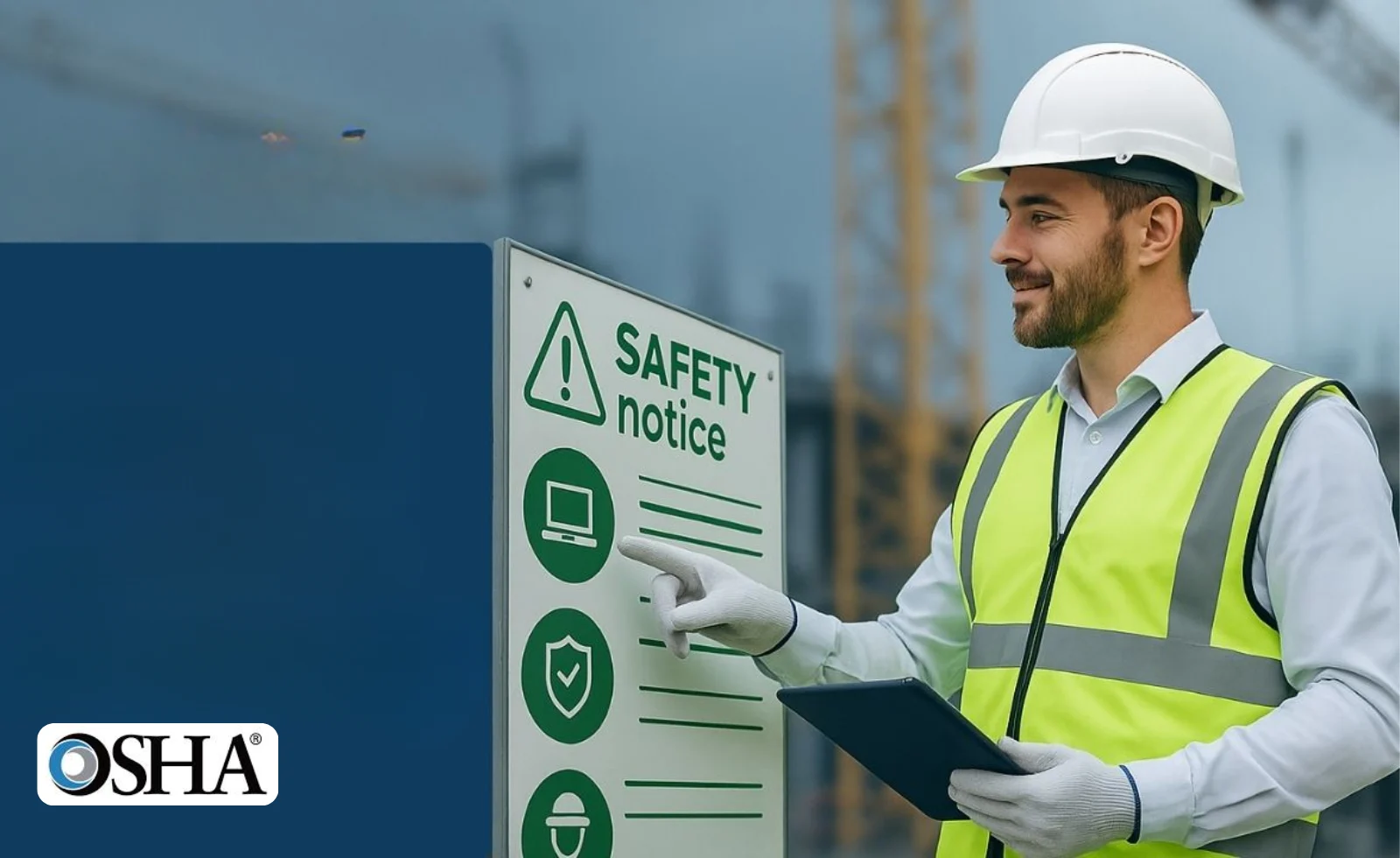
In 2026, workplace safety is not a checkbox activity. It is a strategic business function. And at the heart of any effective workplace safety program is an OSHA-certified safety officer – a professional who brings knowledge, credibility, and accountability to the job.
Whether you run a construction firm, a manufacturing plant, a logistics company, or a hospitality business, here are five compelling reasons why your organization needs an OSHA-certified safety officer right now.
What Is an OSHA-Certified Safety Officer?
Before diving into the reasons, it helps to clarify what OSHA certification actually means.
OSHA stands for the Occupational Safety and Health Administration, a US federal body that sets and enforces workplace safety standards. OSHA’s training programs – particularly the widely recognized OSHA 10-Hour and OSHA 30-Hour courses – have become globally accepted benchmarks for workplace safety competency.
An OSHA-certified safety officer is someone who has completed the OSHA 30-Hour training program (either in General Industry or Construction), demonstrating that they have a thorough working knowledge of hazard identification, risk assessment, regulatory compliance, emergency response, and safety program management.
This person is not simply a “safety warden” who puts up warning signs. They are a trained professional equipped to build, implement, and sustain a comprehensive safety framework across your entire organization.
Challenge 2: The Recruitment Process Drains Internal Resources
Why It Happens
Hiring a safety professional is a fundamentally different process from hiring in most other functions. It requires verifying technical certifications, assessing knowledge of jurisdiction-specific regulations, reviewing incident investigation experience, and running comprehensive background checks – none of which a standard HR workflow is designed to handle efficiently.
The result is a recruitment process that takes far longer than it should, carries a higher-than-average risk of a poor hire, and pulls significant time away from an HR team that has other priorities.
How to Solve It
Outsourcing HSE recruitment to a specialist provider removes this burden from internal teams entirely. A dedicated HSE staffing partner handles every stage of the process – sourcing, technical screening, competency assessment, and shortlisting – and delivers a curated selection of candidates who have already been validated against the role requirements.
Reason 1: Your Business Has Legal Obligations - and Ignorance Is Not a Defense
Every country where businesses operate has laws governing worker health and safety. Governments are not getting more lenient – they are getting stricter. Regulatory bodies around the world are increasing the frequency of workplace inspections, expanding the scope of compliance requirements, and stiffening penalties for violations.
In India, the Occupational Safety, Health and Working Conditions (OSHWC) Code 2020 has unified and tightened the safety obligations of employers across all industries. In the Gulf region, countries like the UAE and Saudi Arabia have aligned their labor safety frameworks with international standards, making HSE compliance a prerequisite for business licensing and contract eligibility.
An OSHA-certified safety officer understands these regulatory landscapes. They know which safety records must be maintained and for how long, how to prepare for external audits, what documentation is required after an incident, and how to close compliance gaps before a government inspector finds them.
Without this expertise in-house, businesses operate on assumption – and assumptions are expensive. A single compliance failure can result in penalties ranging from thousands to hundreds of thousands of dollars, not including operational disruptions and reputational damage.
Hiring or developing an OSHA-certified safety officer is the most effective way to convert compliance from a reactive obligation into a proactive operational strength.
Reason 2: Accidents Cost Far More Than Prevention
Most business leaders understand that workplace accidents are costly. Few, however, appreciate just how deeply those costs run.
The direct costs – medical treatment, workers’ compensation payouts, equipment repair – are visible. The indirect costs are not. These include loss of production during the investigation period, the time required to recruit and train replacement workers, the hidden toll on team morale, increased insurance premiums going forward, and potential civil litigation that can stretch on for years.
Studies consistently show that for every dollar spent on workplace safety, companies save between two and six dollars in accident-related costs. The math is straightforward: prevention is always cheaper than recovery.
An OSHA-certified safety officer is, by design, a prevention specialist. Their role includes conducting routine workplace risk assessments, identifying hazards before they escalate, delivering safety training and toolbox talks, implementing corrective action plans, and tracking safety performance metrics over time.
Companies that have certified safety professionals in their workforce experience measurably lower incident rates than those that do not. This is not anecdotal – it is well-documented across construction, manufacturing, oil and gas, and other high-risk sectors globally.
Simply put, an OSHA-certified safety officer is one of the highest-return investments a business can make.
Reason 3: Certification Builds a Genuine Safety Culture - Not Just Paper Compliance
There is a critical difference between a company that complies with safety regulations on paper and one that has genuinely embedded safety into its culture. The first type does the minimum to pass inspections. The second type proactively protects its people.
Employees notice the difference immediately. When workers see that their employer has invested in qualified safety leadership, they respond with greater trust, engagement, and willingness to follow safety procedures. When they observe that safety practices are enforced consistently – not just when inspectors are present – they internalize those behaviors themselves.
An OSHA-certified safety officer is the catalyst for this cultural transformation. They do not just post safety notices on a bulletin board. They build systems: incident reporting mechanisms that workers actually use, safety committee structures that involve employees at every level, onboarding programs that communicate safety expectations from day one, and feedback loops that allow hazards to be reported without fear of retaliation.
This culture has measurable downstream effects. Companies with strong safety cultures report lower absenteeism, higher employee satisfaction scores, better retention rates, and improved overall productivity. Workers who feel physically safe at work are more mentally present and more engaged with their tasks.
Investing in OSHA certification for your safety officer is, in practice, an investment in your entire workforce.
Reason 4: Your Business Reputation and Tender Eligibility Depend on It
In today’s business environment, how a company manages safety sends a strong signal to clients, partners, investors, and regulators. A poor safety record is a reputational liability. A strong one is a competitive advantage.
This is particularly relevant for companies operating in high-value sectors like infrastructure, energy, manufacturing, and facility management. Government contracts, large-scale construction projects, and partnerships with multinational corporations increasingly require documented proof of certified safety management. In many cases, having an OSHA-certified safety officer on your team is not optional – it is a pre-qualification requirement.
In the Gulf region, for example, major government-backed infrastructure programs explicitly require safety documentation and proof of certified HSE personnel as part of the bidding process. In India, companies targeting export markets or international joint ventures face similar expectations from foreign buyers and partners.
Beyond formal tender requirements, ESG (Environmental, Social, and Governance) reporting has become a standard expectation for mid-to-large businesses. Workplace safety sits squarely within the “Social” pillar of ESG. Companies with strong safety programs, low incident rates, and certified safety leadership score better on ESG metrics – which increasingly influences investor decisions, credit ratings, and stakeholder trust.
In 2026, your safety credentials are part of your brand. An OSHA-certified safety officer helps you build and protect that brand.
Reason 5: The Human Cost Is Real - and Your Organization Has a Moral Obligation
Beyond the legal, financial, and reputational arguments, there is a human reason that matters most: people’s lives are at stake.
Every worker who walks through your gates has a family, responsibilities, and a life outside work. They trust that your organization will provide them with an environment where they can do their job without risking their health or their life. That trust is a serious responsibility.
An OSHA-certified safety officer is the person in your organization who takes that responsibility professionally and personally. They are trained to see the hazards that others overlook. They are empowered to stop unsafe work. They are accountable for ensuring that your workers go home the same way they came in.
Organizations that view safety as a purely regulatory obligation miss this point entirely. The most resilient and admired businesses in any industry are those that treat worker wellbeing as a genuine corporate value – and demonstrate that commitment through qualified safety leadership.
If you are looking to build a business that lasts, starts with protecting the people who build it.
Who Should Be OSHA Certified in Your Organization?
OSHA training comes in two primary formats, and understanding the difference helps you make the right investment:
OSHA 10-Hour: Designed for general workers and entry-level employees. Covers fundamental safety awareness and basic hazard recognition. Suitable for the broader workforce as an introductory program.
OSHA 30-Hour: Designed for supervisors, safety officers, managers, and anyone in a role that involves oversight of health and safety systems. Covers a comprehensive range of topics including OSHA standards and regulations, hazard identification and control, emergency response procedures, recordkeeping and documentation, industry-specific safety modules, and safety program design and management.
For most organizations, the OSHA 30-Hour program is the appropriate investment for safety-critical roles. If you are considering training your safety team, operations managers, site supervisors, or HSE leads, this is the certification that delivers the most complete and applicable knowledge.
Getting OSHA Certified in India: What You Need to Know
For professionals and organizations in India, accessing quality OSHA training has become much more straightforward in recent years. Reputable safety institutions now offer the OSHA 30-Hour program through flexible formats including classroom-based, blended learning, and online delivery – making it accessible for both working professionals and fresh graduates entering the safety field.
One institution that has been making an impact in this space is Al Salama School of Safety Studies, known for its commitment to producing competent, job-ready safety professionals. For those specifically seeking OSHA 30-Hour Training in Kerala, there are now quality options available locally that meet international standards, eliminating the need to travel abroad for certification.
When selecting an OSHA training provider, look for institutions that are recognized by an authorized outreach program, offer experienced instructors with field-level safety backgrounds, provide comprehensive study materials, and offer post-certification support and career guidance.
Key Benefits at a Glance
|
Business Benefit |
Impact of OSHA-Certified Safety Officer |
|
Legal Compliance |
Avoids fines, audit failures, and shutdowns |
|
Cost Reduction |
Saves on accident costs, insurance premiums, legal fees |
|
Accident Prevention |
Measurably reduces incident frequency and severity |
|
Employee Morale |
Improves engagement, reduces absenteeism and turnover |
|
Contract Eligibility |
Meets tender and pre-qualification requirements |
|
Reputation |
Strengthens ESG credentials and stakeholder trust |
|
Safety Culture |
Shifts workforce mindset from reactive to proactive |
Frequently Asked Questions
What is the difference between OSHA 10-Hour and OSHA 30-Hour training?
The OSHA 10-Hour program is a foundational safety awareness course designed for general workers and new employees. The OSHA 30-Hour program is an advanced, comprehensive course for supervisors, managers, and safety professionals. It covers OSHA regulations in depth, hazard identification and control, recordkeeping, emergency response, and safety program management. For anyone in a safety leadership or oversight role, the 30-Hour program is the appropriate certification.
Is OSHA certification valid outside the United States?
Yes. While OSHA is a US regulatory body, the OSHA 30-Hour certification is globally recognized by multinational employers, international contractors, and major clients across the Middle East, South Asia, Southeast Asia, and beyond. Many organizations use OSHA certification alongside region-specific qualifications like NEBOSH for a comprehensive safety credential profile.
How long does it take to complete the OSHA 30-Hour course?
The OSHA 30-Hour program involves 30 hours of structured instruction. Depending on the delivery format, this is typically completed over four to five consecutive days in an intensive format, or spread over two to three weeks in evening or weekend sessions designed for working professionals.
Which industries benefit most from having an OSHA-certified safety officer?
While OSHA certification adds value across all industries, it delivers the highest impact in sectors with elevated risk profiles: construction, oil and gas, manufacturing, logistics and warehousing, chemical processing, facilities management, food processing, and hospitality. In these fields, the frequency and severity of potential hazards make certified safety management not just beneficial but essential.
Can small businesses also benefit from hiring an OSHA-certified safety officer?
Absolutely. The scale of a business does not reduce the legal obligation to maintain a safe workplace. In fact, small businesses often face disproportionately high costs when accidents occur, because they have fewer financial reserves to absorb those costs. An OSHA-certified safety officer helps small businesses build proportionate, effective safety systems that protect both workers and the business itself.
What topics are covered in the OSHA 30-Hour General Industry training?
The OSHA 30-Hour General Industry program covers a wide range of topics including introduction to OSHA standards, walking and working surfaces, emergency action plans, fire protection and prevention, electrical safety, hazard communication, personal protective equipment (PPE), machine guarding, lockout/tagout procedures, industrial hygiene, bloodborne pathogens, materials handling and storage, and recordkeeping requirements.
Is OSHA training available online, or does it have to be done in a classroom?
OSHA training is available in multiple formats, including classroom-based learning, blended (combined in-person and online) delivery, and fully online programs. The right format depends on your team’s schedule, location, and learning preferences. Many accredited training providers now offer flexible delivery to accommodate working professionals without disrupting daily operations.
Final Thoughts
Workplace safety is not a cost center. It is a value driver – for your people, your business, and your future. An OSHA-certified safety officer brings something no policy document or safety poster can replace: informed, accountable, and proactive human judgment applied every single day to the environments where your workers operate.