
Electric Vehicles Fire Safety Measures: What Every EV Owner Must Know
Electric vehicles are no longer a novelty on global roads – they are a reality. From family sedans to commercial delivery fleets, EVs have become a mainstream choice for millions of drivers who want cleaner, more efficient transportation. But with this rapid adoption comes a responsibility that is often overlooked: fire safety.
Unlike conventional petrol or diesel vehicles, EVs carry high-voltage lithium-ion battery packs that behave very differently when they fail. Understanding the unique fire risks these vehicles present – and what you can do to prevent, respond to, and recover from an EV fire – is essential knowledge for every owner, driver, building manager, and first responder in 2026.
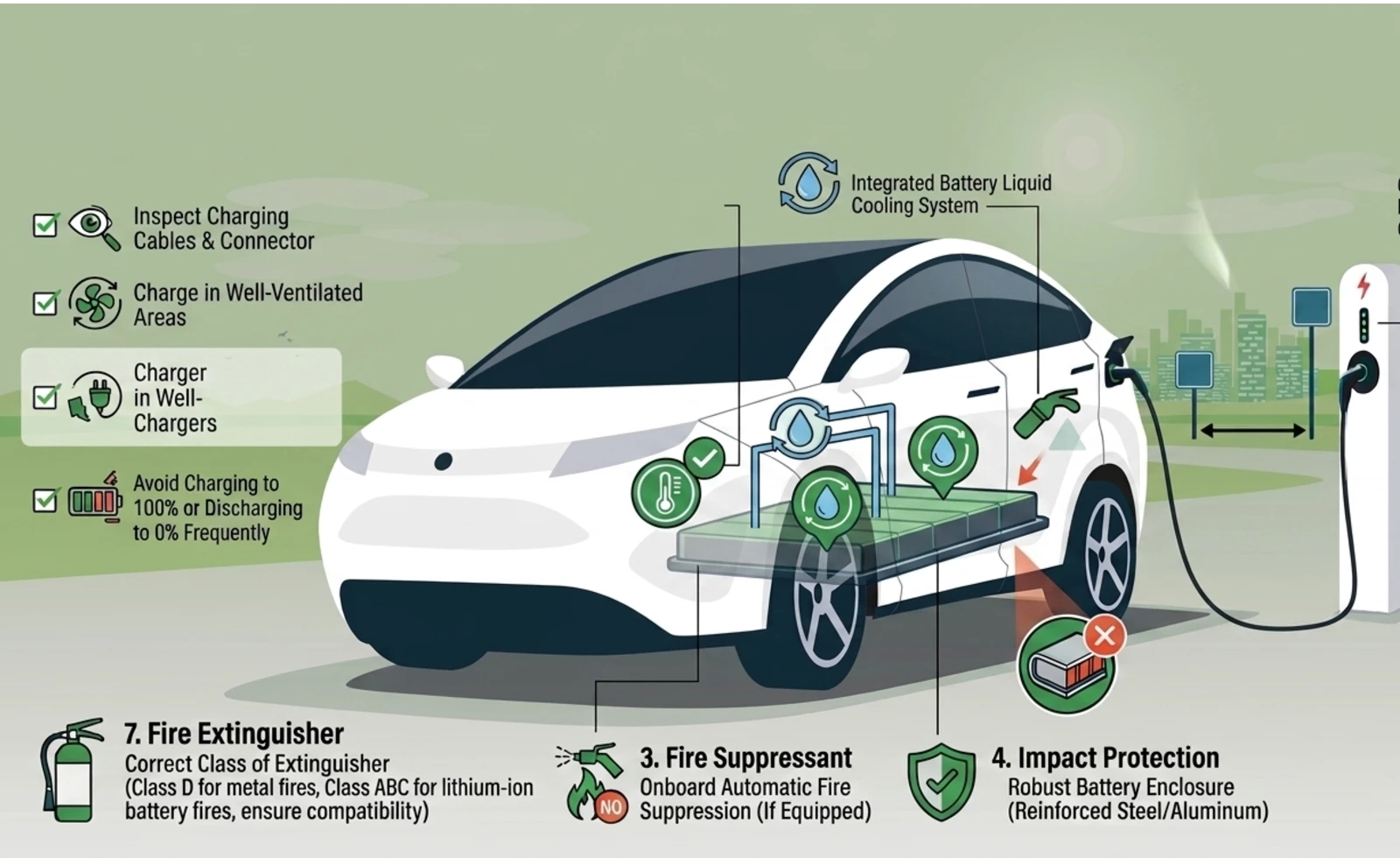
Why EV Fire Safety Is a Different Challenge
When a traditional vehicle catches fire, the cause is usually clear: a fuel leak, an overheated engine, or an electrical fault. Firefighters have well-established methods to deal with these situations. EV fires, however, introduce a set of complications that require entirely new thinking.
The central issue is the lithium-ion battery pack. These batteries store enormous amounts of energy in a compact space, which is what makes EVs so efficient. But under certain conditions – a severe collision, water submersion, excessive heat, or even a manufacturing defect – individual battery cells can enter a dangerous state known as thermal runaway.
Thermal runaway is a self-sustaining chain reaction. When one cell overheats, it releases energy that heats the neighbouring cells, which then fail in turn. The process escalates rapidly, generating extreme heat, toxic gases, and in many cases, intense fire. What makes this especially dangerous is that thermal runaway can begin silently – with no visible smoke or flame – for several minutes before the situation becomes visible to the human eye.
EV fires are also notoriously difficult to extinguish. The battery pack can continue to re-ignite hours – and in some documented cases, days – after the initial fire appears to have been put out. This re-ignition risk is one of the most significant challenges facing emergency services worldwide.
What Causes an EV Fire?
Understanding the root causes of EV fires helps drivers take smarter preventive action. The most common triggers include:
Physical damage from collisions. A severe impact can pierce or compress the battery pack, disrupting the internal cell structure and triggering thermal runaway. Even damage that appears minor on the outside can compromise internal battery integrity.
Charging faults. Overcharging, using incompatible charging equipment, or charging with damaged cables introduces excessive voltage or heat into the battery system. Charging in extreme weather – especially during electrical storms or in very high ambient temperatures – amplifies this risk.
Water exposure. Flooding or water submersion can cause short circuits within the battery pack. An EV that has been submerged should be considered potentially hazardous for an extended period after it is retrieved.
Manufacturing defects. Though rare, defects in individual battery cells can lead to internal short circuits without any external triggering event.
Battery aging and damage. Older or physically degraded batteries are more vulnerable to thermal events, especially if they have been charged improperly over time.
Prevention: The First Line of Defence
The most effective fire safety measure is prevention. Here is what EV owners and building managers can do to significantly reduce risk:
For EV Owners
- Use only certified, compatible charging equipment. Your EV’s manufacturer specifies approved charger types and power ratings. Deviating from these – especially with cheaper, uncertified third-party chargers – increases the risk of battery stress.
- Charge smartly. Many EV manufacturers and battery experts recommend keeping your battery charged between 20% and 80% for day-to-day use, reserving a 100% charge for longer trips. Avoid leaving your vehicle at full charge for prolonged periods.
- Do not charge after an accident. If your EV has been involved in a collision, even a minor one, do not plug it in until a qualified technician has inspected and cleared it. Internal battery damage may not be externally visible.
- Park and charge in open, ventilated areas where possible. Underground car parks and enclosed garages reduce the ability of toxic gases to dissipate if a thermal event begins.
- Stay alert to warning signs. Unusual smells (particularly a chemical or burning odour), visible swelling of any part of the vehicle, unexpected heat around the battery area, or unexplained warning lights on the dashboard should never be ignored.
What to Do During an EV Incident
If you are involved in or witness an EV fire or collision that may have compromised the battery, time and distance are your greatest allies.
- Step 1 – Evacuate immediately. Get all passengers out of the vehicle. Apply the parking brake and switch off the ignition. Every second spent inside increases exposure to toxic fumes.
- Step 2 – Create distance. Move at least 30 metres away from the vehicle. Warn bystanders to do the same. This applies even if there is no visible smoke or flame – a thermal runaway event can develop rapidly without warning.
- Step 3 – Keep ignition keys at distance. Remote key fobs and smart keys should also be kept at least 30 metres away, as proximity to the vehicle’s sensors may inadvertently trigger systems.
- Step 4 – Call emergency services. When contacting emergency services, clearly state that the vehicle is an electric vehicle and provide the make and model. This allows first responders to access vehicle-specific emergency response guides, which contain critical information about high-voltage systems and battery locations.
- Step 5 – Do not attempt self-rescue of the vehicle. EV battery fires are not suitable for amateur suppression attempts. Leave it to trained firefighters with specialist equipment.
- Step 6 – Seek medical attention if exposed. Battery fires release toxic gases and may produce dangerous fluid splatter. If you or anyone nearby has been exposed to smoke, vapours, or battery fluid, seek medical attention promptly.
After the Incident: The Danger Is Not Over
The EV industry and fire safety sector are rapidly co-evolving. In 2026, several advances are improving how we manage these risks:
- Battery Management Systems (BMS). Modern EVs come equipped with sophisticated battery management software that continuously monitors cell voltages, temperatures, and charge states. Better BMS technology can flag anomalies early and reduce charge rates or shut down charging to prevent dangerous conditions.
- Vehicle Emergency Response Guides (ERGs). Most major EV manufacturers now publish detailed emergency guides that firefighters can access via QR codes or online databases. These guides outline where high-voltage components are located and how to safely de-energise the vehicle.
- Thermal containment systems. Large EV fire blankets, fire pit containers, and water-submersion cages are being deployed in emergency response arsenals. These tools allow responders to contain a burning EV and manage re-ignition risks more safely.
- Regulation and standardisation. Governments and fire authorities around the world are developing updated building codes that require enhanced fire safety measures in new developments with integrated EV charging infrastructure.
EV Fire Safety for Consumers: A Quick Reference Checklist
- Charge with manufacturer-approved equipment only
- Keep battery charge between 20–80% for daily use
- Never charge a damaged EV until it is professionally inspected
- Install interconnected smoke alarms in home charging areas
- Avoid charging during extreme weather or electrical storms
- Know your vehicle’s emergency response guide (available from the manufacturer)
- Keep a 30-metre safety exclusion zone around any damaged or burning EV
- Always alert emergency services to the fact that the vehicle is an EV
Frequently Asked Questions
Are electric vehicles more likely to catch fire than petrol cars?
Statistically, EV fires occur less frequently than internal combustion engine vehicle fires. However, when EV fires do occur, they present distinct challenges – including high-temperature burning, toxic gas emissions, and significant re-ignition risk – that make them more complex to manage than typical vehicle fires.
What is thermal runaway and why is it dangerous?
Thermal runaway is a self-escalating chemical reaction within a lithium-ion battery where one failing cell generates enough heat to cause neighbouring cells to fail in a cascading sequence. It can produce extreme heat, toxic gases, and fires that are extremely difficult to suppress with conventional methods.
What should I do if my EV catches fire? Exit the
vehicle immediately, move all passengers and yourself at least 30 metres from the vehicle, call emergency services, and inform them that the vehicle is an EV. Do not attempt to extinguish the fire yourself. Keep the remote key at distance and wait for trained firefighters to respond.
Can I charge my EV overnight safely?
Overnight charging is generally safe when using manufacturer-approved equipment installed by a licensed electrician. Avoid using generic extension leads not rated for EV charging, and ensure smoke alarms are installed in the charging area. Smart chargers with built-in timers and temperature monitoring add an additional layer of safety.
Is it safe to park an EV in an underground garage?
While it is not prohibited, underground parking does present additional risk factors – poor ventilation, difficult emergency access, and proximity to structural elements. If charging in underground facilities, ensure the charging infrastructure meets current fire safety standards and that the facility has appropriate detection and suppression systems.
Conclusion
Electric vehicles represent a remarkable leap forward in sustainable transportation. But responsible ownership goes hand in hand with safety awareness. The lithium-ion batteries that power these vehicles demand respect – not fear, but informed caution.
By understanding the nature of EV fire risks, following safe charging practices, equipping shared spaces with appropriate suppression tools, and knowing exactly what to do when things go wrong, EV owners and building managers can dramatically reduce the likelihood and impact of a fire event.
The road ahead for EVs is bright. Making fire safety part of that journey ensures that it stays that way.