
Underground Utility Colour Codes Explained: A Complete Guide to Safe Excavation and Workplace Safety
A single strike on a buried cable or pipe can stop a project for days. It can also injure workers, cut power to a neighbourhood, and leave your business with repair bills and legal trouble. Most of these incidents are preventable. They usually happen because someone did not understand the markings on the ground, or did not look for them at all.
This guide covers what underground utility colour codes are, what each colour means, and how to use them to keep your people, budget and schedule safe.
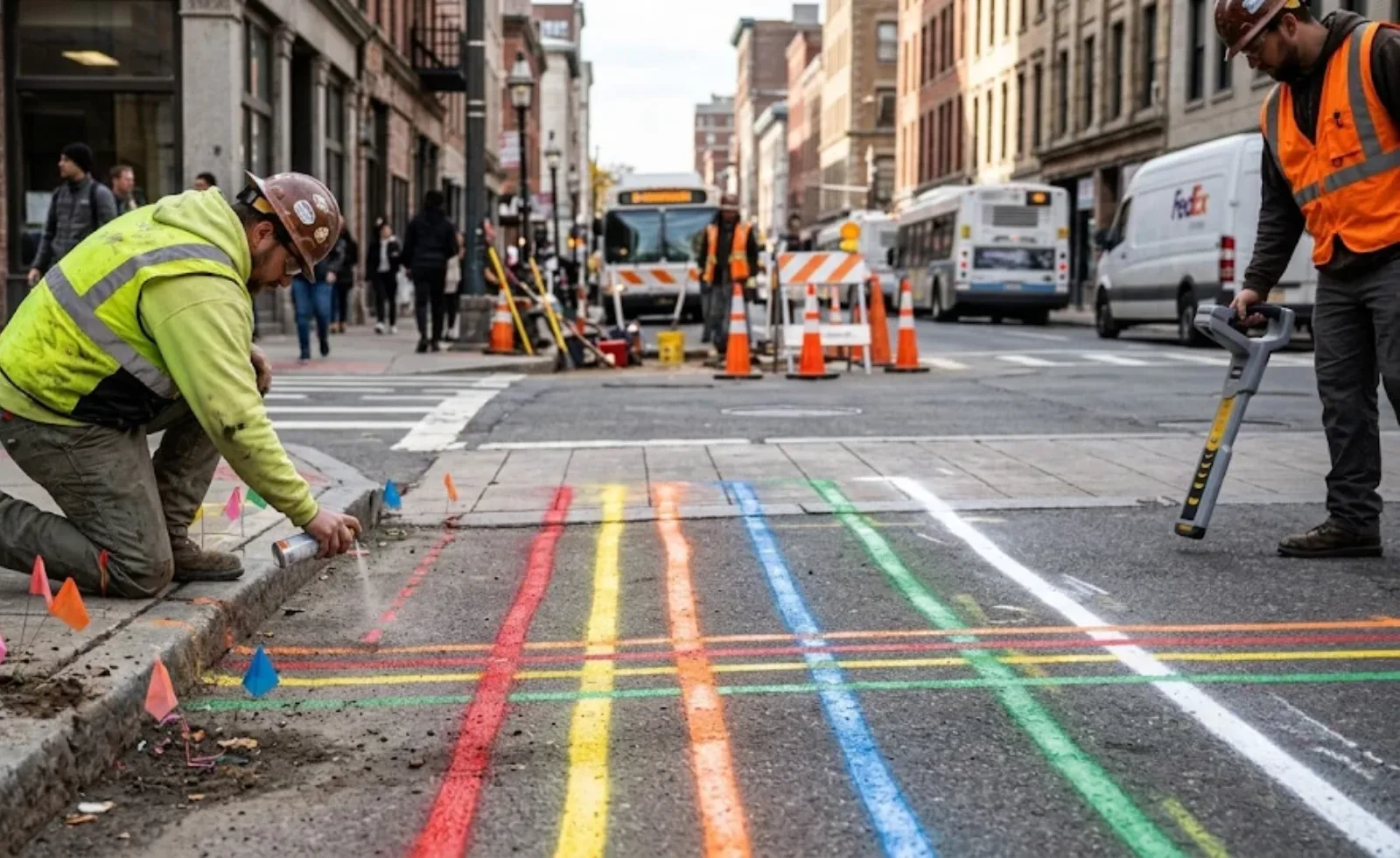
Quick Answer: What Are Underground Utility Colour Codes?
Underground utility colour codes are a standard set of colours used on paint marks, flags, stakes and warning tapes. They show which type of service is buried below: electricity, gas, water, sewer, telecommunications and so on. Anyone who digs, drills or breaks ground can see at a glance what lies beneath and take the right precautions.
Why Utility Colour Codes Matter for Your Business
If you run a construction company, a facilities team, a factory or an infrastructure contractor, you probably recognise these problems:
- Project delays: A damaged line means stopped work, emergency repairs and missed deadlines.
- Rising costs: Repair charges, equipment downtime, idle labour and penalties add up fast.
- Injury risk: Contact with live electrical cables or gas lines can cause burns, explosions and fatalities.
- Legal and insurance exposure: Poor excavation planning can lead to claims, fines and damaged client relationships.
- Reputation damage: One serious incident can cost you future contracts.
Colour codes will not solve all of this on their own. But they are the fastest visual warning system you have on site, and they cost almost nothing compared with a single strike.
The Standard Utility Colour Codes
The most widely used system is the American Public Works Association (APWA) Uniform Color Code. It is used across the United States and Canada, and many international projects follow it or something very close to it.
Colour | What It Marks | Typical Examples |
Red | Electric power | Power cables, conduit, lighting cables |
Yellow | Gas, oil, steam, petroleum | Natural gas mains, fuel pipelines |
Orange | Communications | Telephone, fibre optic, cable TV, alarm lines |
Blue | Drinking (potable) water | Water mains and supply lines |
Green | Sewer and drainage | Sewage pipes, storm drains |
Purple | Reclaimed water, irrigation, slurry | Treated water for landscaping or industry |
Pink | Temporary survey markings | Surveyor reference points, unknown utilities |
White | Proposed excavation | The planned dig area |
A Simple Way to Remember Them
- Red means danger from power.
- Yellow means flammable material.
- Blue means water you could drink.
- Green means waste water.
- Orange means data and communication.
- White shows where you intend to dig.
Learn those six and you can read most site markings.
A Closer Look at Each Colour
Red: Electric
Red marks power lines, from low-voltage building supply to high-voltage underground cables. Electrical contact is one of the most dangerous outcomes of excavation. A cable may look intact after a light strike but be damaged inside. Treat any strike, even a minor one, as an emergency. Keep everyone away and call the utility owner.
Yellow: Gas, Oil and Steam
Yellow signals material that can burn or explode. A damaged gas main can release gas quickly, and a spark from a machine or a worker’s tools can be enough to ignite it. Crews working near yellow marks should carry the right gas detection equipment and know the evacuation plan before the first scoop.
Orange: Communications
Orange covers telephone, internet, fibre optic, signal and cable television lines. These are less likely to injure someone, but the business impact can be huge. A cut fibre line can cut off hospitals, offices, banks and entire districts, and repair costs and compensation claims can be substantial.
Blue: Potable Water
Blue marks pressurised drinking water pipes. A broken line floods trenches, undermines nearby soil and can cause a collapse risk for workers inside. It can also contaminate the supply.
Green: Sewer and Drainage
Green marks sewers and drains, which are often larger and deeper than people expect. Damage creates health hazards from contaminated water and harmful gases. It also creates costly cleanup work.
Purple: Reclaimed Water and Slurry
Purple marks reclaimed water used for irrigation or industrial processes. This water is not safe to drink. A purple mark reminds crews that “just water” is not always harmless.
Pink: Temporary Survey Marks
Pink is used by surveyors for temporary reference points. It is also commonly used for utilities that have not been identified. If you see pink, treat the location as uncertain and investigate further before digging.
White: Proposed Excavation
White is the only colour that marks your own plans rather than existing utilities. White paint or flags show the boundaries of the area you intend to dig, so utility locators know exactly where to mark.
Warning Tapes and Pipe Markings Follow Colour Logic Too
Colour does not stop at paint on the surface. Underground warning tape is buried above pipes and cables as a final alert before a machine or spade reaches the service itself. The tape colour normally matches the utility type, so red tape sits above electrical lines, yellow above gas, and so on.
Above-ground pipes and valves in plants and buildings often use their own colour systems, which differ from the underground code. Never assume that an industrial pipe colour matches the surface markings outside.
Colour Codes Vary by Country, So Check Local Rules
This is a point many beginners miss. There is no single worldwide standard. North America largely follows APWA. The United Kingdom has its own conventions, which use different colours for some utilities. Gulf countries, India and other regions may apply local authority requirements, and individual utility companies sometimes use their own variations.
Before you begin any project, confirm three things:
- Which colour system applies in your country or region.
- What the local utility authorities require for approval and marking.
- Whether your client or project specification adds further requirements.
If you work on international projects, make sure every team member is trained on the specific code for each location. The wrong assumption can be just as dangerous as having no knowledge at all.
How to Use Colour Codes for Safe Excavation: A Step-by-Step Process
Colour codes only help if they are part of a proper process. Here is a practical workflow you can adopt:
- Plan before you dig. Review drawings, as-built records and site history. Identify likely utilities before you set foot on site.
- Notify the utility owners and local authority. Request locates and approval where required. Do not rely on a visual survey alone.
- Mark your proposed dig area. Use white paint or flags so locators know where to work.
- Confirm utility marks on site. Check that locators have used the correct colours and that the marks cover your full dig zone.
- Use non-destructive methods near utilities. Hand digging, vacuum excavation or careful potholing help you verify exact positions without damaging them.
- Brief your team. Everyone on site, from machine operators to labourers, should know the colours, the hazards and the emergency plan.
- Keep marks visible. Paint fades, rain washes it away and traffic wears it down. Re-mark when needed and stop work if marks become unclear.
- Respond to strikes immediately. Stop work, evacuate the area, call emergency services and the utility owner, and do not attempt repairs yourself.
Common Mistakes That Lead to Utility Strikes
- Assuming “no marks” means “no utilities.”
- Digging outside the area that was marked.
- Using machinery too close to marked lines.
- Not renewing faded marks.
- Relying on old drawings without verification.
- Letting untrained workers operate near live services.
- Ignoring pink or unidentified markings.
- Skipping the pre-task briefing because of time pressure.
Every one of these is avoidable with basic training and a disciplined approach
The Business Case: Training Pays for Itself
Teams that understand utility marking make fewer errors, work with more confidence and spend less time on rework. For business owners, the benefits are clear: fewer stoppages, lower insurance risk, stronger compliance records and a better reputation with clients.
Training does not need to be complicated. A short, structured course that covers colour codes, locating methods, safe digging practices and emergency response can change how your whole site operates. If you are looking to upskill your workforce, Al Salama School of Safety Studies offers practical safety training designed for working professionals, and it is worth exploring if you want your teams to be properly equipped.
Final Thoughts
Underground utility colour codes are simple, but they carry serious responsibility. Learn what each colour means, check the rules in your region, follow a clear excavation process and train every person on site. Do that consistently, and you protect lives, budgets and project timelines.
Frequently Asked Questions
What do underground utility colour codes mean?
They are standard colours used to mark the type of buried service. For example, red marks electricity, yellow marks gas, blue marks drinking water, green marks sewer, and orange marks communications.
What colour is used for electrical lines underground?
Red is the standard colour for electric power lines and cables under the APWA system.
What does yellow mean in utility marking?
Yellow indicates gas, oil, steam or other flammable petroleum products. It is one of the most hazardous categories, so extra care is needed.
What does white paint mean on the ground?
White shows the planned excavation area. It tells utility locators where you intend to dig so they can mark nearby services.
What does pink paint mean?
Pink is used for temporary survey markings and often for unidentified utilities. Treat it with caution and verify before digging.
Are utility colour codes the same in every country?
No. Many regions follow the APWA code, but the UK and other countries use their own systems or variations. Always confirm local requirements.
Can I dig if there are no utility markings?
Not safely. Missing marks do not guarantee that nothing is buried there. Request locates, review records and use safe digging methods.
What should I do if I hit an underground utility?
Stop work immediately, move everyone to a safe distance, call emergency services and the utility owner, and do not try to fix the damage yourself.
Why is warning tape buried above utilities?
It acts as a final visual warning that a cable or pipe is just below. The colour usually matches the type of utility.
Who should be trained in utility colour codes?
Everyone involved in digging or site supervision, including operators, labourers, supervisors, engineers and safety officers.
Ready to Make Your Excavation Sites Safer?
Do not wait for a utility strike to find out how much a training gap costs. Equip your supervisors, operators and safety teams with the knowledge to read the ground before they break it. If you are searching for a Safety Course in Kerala, visit Al Salama Safety to explore professional training programmes built for real workplaces.
Protect your people. Protect your projects. Start with the right training today.
Disclaimer: Colour codes vary by region and utility authority. Always check local regulations and utility owner requirements before excavation.