
What Is Arc Flash: Causes, Risks, and Prevention
Electricity powers almost everything we do, but it can turn dangerous in a fraction of a second. One of the most severe – and least understood – electrical hazards in any workplace is arc flash. It happens without warning, releases extreme heat and force, and can permanently injure anyone standing nearby.
If you work around electrical panels, switchgear, or industrial equipment, understanding arc flash isn’t optional. It’s the difference between going home safely and suffering a life-changing injury. This guide breaks down what arc flash actually is, why it happens, who is at risk, and the practical steps that reduce that risk.
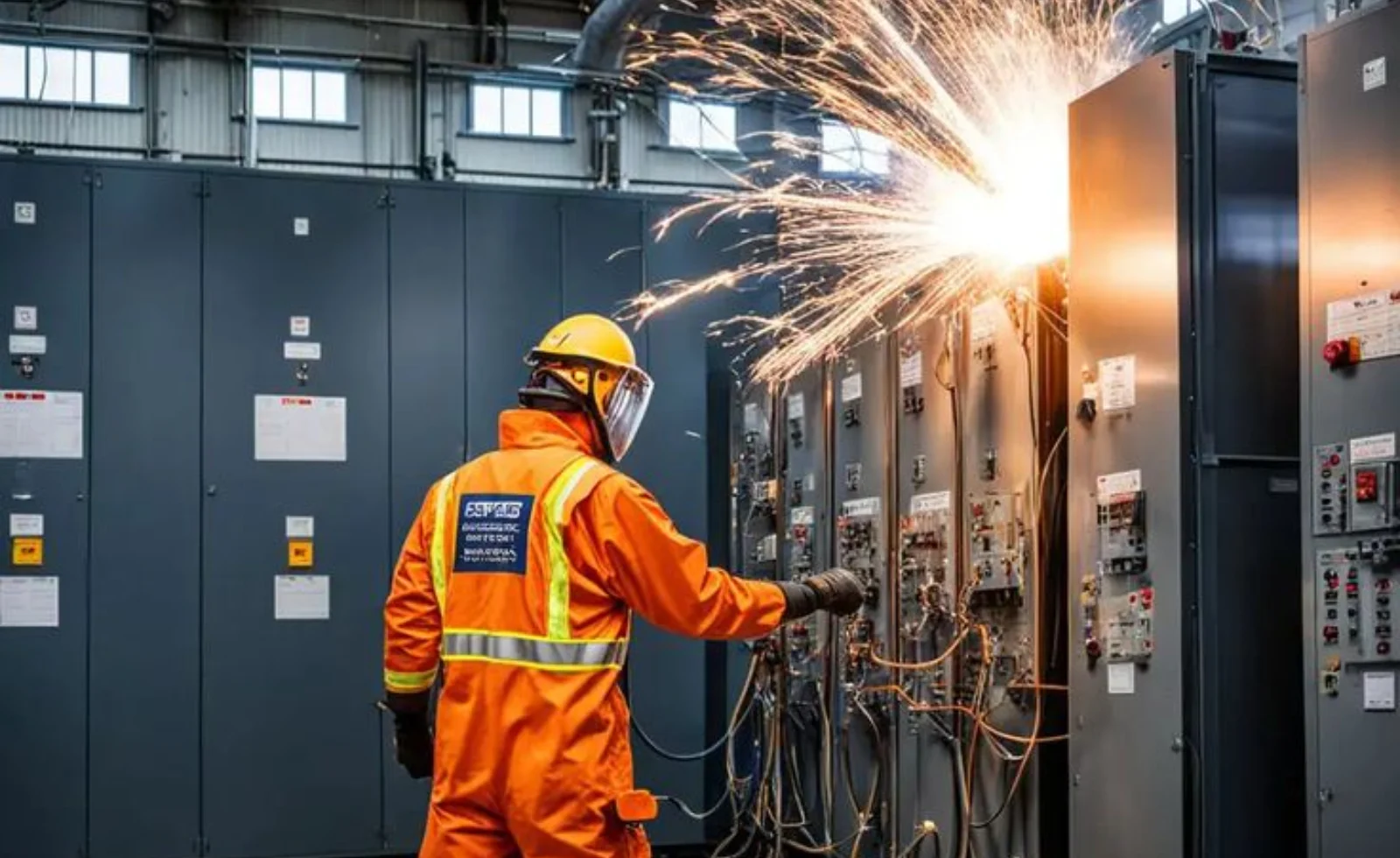
What Is Arc Flash?
Arc flash is a sudden, explosive release of electrical energy that occurs when electric current leaves its intended path and travels through the air between two conductors, or between a conductor and the ground. Instead of flowing safely through wires, the electricity arcs across a gap, creating a super-heated plasma fireball.
This isn’t a slow burn. It happens in milliseconds. In that short time, an arc flash can generate temperatures hotter than the surface of the sun – often cited at around 35,000°F (19,400°C) <cite index=”4-1″>, hot enough to vaporize copper and melt metal instantly</cite>. The event also produces a blinding flash of light, a deafening blast sound, and a pressure wave strong enough to knock a person off their feet.
It’s important to separate two related but different terms:
- Arc flash refers to the intense heat, light, and radiation from the electrical explosion.
- Arc blast refers to the physical pressure wave and force that accompanies it, which can throw workers, launch shrapnel, and damage equipment.
Both usually occur together, and both are covered under electrical safety standards because each can cause serious harm on its own.
What Causes Arc Flash?
Arc flash doesn’t happen randomly – it’s almost always triggered by a fault condition or human error around energized equipment. Common causes include:
1. Accidental Contact With Live Parts
Dropping a tool, touching a conductor with a test probe, or brushing against an exposed live part can create a short circuit that ignites an arc.
2. Equipment Failure or Deterioration
Aging insulation, corroded connections, loose terminals, and worn-out components increase the chance of an unintended electrical path forming inside a panel or enclosure.
3. Dust, Moisture, and Contamination
Conductive dust, condensation, or debris inside electrical cabinets can bridge gaps between conductors, especially in humid or poorly maintained environments.
4. Improper Work Practices
Working on energized equipment without proper isolation, skipping lockout-tagout procedures, or using the wrong tools near live circuits are leading human-error causes.
5. Design or Installation Flaws
Incorrect wiring, undersized components, or equipment not rated for the available fault current can fail under normal load and trigger an arc.
6. Switching Operations
Opening or closing breakers, disconnects, or switches under load – particularly on older or poorly maintained gear – can produce an arc if the equipment can’t safely interrupt the current.
In short, arc flash risk grows wherever energized equipment, human proximity, and a breakdown in insulation or procedure meet at the same time.
Why Arc Flash Is So Dangerous: The Risks
Arc flash isn’t just an electrical issue – it’s a whole-body hazard. The risks extend to the worker, nearby personnel, and the facility itself.
Severe burns. The extreme radiant heat can cause third-degree burns on exposed skin in a fraction of a second, even without direct contact with the arc.
Hearing and vision damage. The sound blast can exceed 140 decibels, and the intense light can cause temporary or permanent eye damage.
Physical trauma. The pressure wave from an arc blast can throw a person several feet, causing fractures, concussions, or internal injuries – separate from the burn hazard itself.
Molten metal and shrapnel. Vaporized metal from conductors can spray outward, causing puncture wounds or igniting clothing.
Respiratory harm. Toxic gases and fine metal particles released during the event can be inhaled, damaging the lungs.
Fatalities. Arc flash incidents remain a leading cause of severe workplace injury and death in industries involving electrical maintenance. <cite index=”7-1″>Industry data links arc-flash-related incidents to roughly 30,000 electrical accidents each year in the United States alone, contributing to thousands of burn injuries and several hundred fatalities annually</cite>.
Business and equipment losses. Beyond human injury, an arc flash can destroy switchgear, halt production, trigger costly downtime, and lead to regulatory penalties.
The financial and human cost together is why arc flash is treated as a top-tier hazard in electrical safety programs, not a minor risk to be managed casually.
Who Is Most at Risk?
Arc flash hazards are not limited to high-voltage utility work. Anyone who works on or near energized electrical equipment can be exposed, including:
- Electricians and maintenance technicians
- Industrial and manufacturing plant workers
- Utility and power distribution personnel
- Facility engineers performing panel inspections
- Contractors doing equipment upgrades or troubleshooting
Even equipment operating at relatively low voltages, such as 120V, can produce a hazardous arc flash under the right fault conditions, which is why modern safety standards apply across voltage levels rather than only to high-voltage systems.
How to Prevent Arc Flash: Practical Safety Measures
The good news is that arc flash is largely preventable. A combination of engineering controls, procedures, training, and protective equipment can dramatically cut the risk.
- Conduct an Arc Flash Risk Assessment
Every facility with energized equipment should have a documented arc flash risk assessment that calculates incident energy levels and defines safe approach boundaries for each piece of equipment. This assessment should be reviewed periodically and updated whenever the electrical system changes.
- Follow the Hierarchy of Risk Controls
Modern safety practice, reflected in the latest edition of NFPA 70E, <cite index=”8-1″>encourages prioritizing hazard elimination and engineering controls before relying on personal protective equipment as the final layer of defense</cite>. In practical terms, that means:
- Eliminate the hazard by de-energizing equipment whenever possible
- Substitute safer equipment or remote-operated switching where feasible
- Use engineering controls like arc-resistant switchgear and current-limiting devices
- Apply administrative controls such as warning labels and restricted access
- Use PPE only as the last line of defense, not the first
- De-Energize Before You Work
Establishing an electrically safe work condition through proper lockout-tagout procedures remains the single most effective way to eliminate arc flash risk. If equipment isn’t energized, it can’t arc.
- Use Arc-Rated PPE Correctly
When work on energized equipment cannot be avoided, arc-rated clothing, face shields, insulated gloves, and hearing protection matched to the calculated incident energy level are essential. PPE should always be selected based on the specific hazard assessment for that equipment, not guesswork.
- Label Equipment Clearly
Arc flash warning labels should show the hazard category, required PPE, and safe approach boundaries so workers can make informed decisions before opening a panel.
- Maintain Electrical Equipment Regularly
Routine inspection and maintenance catch loose connections, corrosion, and insulation breakdown before they become fault conditions. Thermal imaging and infrared scans are especially useful for spotting hidden problems.
- Train and Certify Workers
Only qualified, trained personnel should work on or near energized equipment. Ongoing training keeps workers current on safe work practices, boundary distances, and emergency response steps.
- Establish Approach Boundaries
Defining and enforcing limited and restricted approach boundaries keeps unqualified personnel at a safe distance and requires extra precautions for anyone entering the higher-risk zone.
- Plan for Emergencies
An emergency response plan – including first aid for burns, evacuation routes, and clear communication – should be part of every energized work task, so the team can react quickly if something goes wrong.
Arc Flash and Regulatory Standards
In the United States, arc flash safety is primarily governed by NFPA 70E, the Standard for Electrical Safety in the Workplace. <cite index=”4-1″>While OSHA does not maintain a standalone arc flash regulation, its electrical safety rules reference NFPA 70E as the recognized industry benchmark, and inspectors routinely use it to evaluate whether an employer’s practices are adequate</cite>. <cite index=”6-1″>The standard is revised roughly every three years, with the current edition released in 2024, and it requires periodic review of arc flash studies and safety training to keep programs current with changing equipment and work conditions</cite>.
Globally, similar principles are reflected in national and international electrical safety codes, and organizations are increasingly aligning arc flash calculations with IEEE 1584 methodology for incident energy analysis. Regardless of the exact regulation your country follows, the underlying goal is the same: identify the hazard, calculate its severity, and control it before anyone gets hurt.
Frequently Asked Questions
What exactly happens during an arc flash?
An arc flash occurs when electric current jumps through the air between conductors instead of flowing through its intended path, creating an explosive release of heat, light, and pressure in a fraction of a second.
What's the difference between arc flash and arc blast?
Arc flash refers to the heat and light energy released during the event, while arc blast refers to the pressure wave and physical force that comes with it. They typically happen together.
Can arc flash occur at low voltages like 120V?
Yes. Under certain fault conditions, even low-voltage systems can produce enough energy to cause a hazardous arc flash, which is why safety standards apply across voltage levels, not just high-voltage equipment.
What PPE protects against arc flash?
Arc-rated clothing, flash suits, face shields or hoods, insulated gloves, and hearing protection are commonly used, with the specific rating determined by an incident energy calculation for each piece of equipment.
How often should an arc flash risk assessment be updated?
It should be reviewed periodically and updated any time there’s a significant change to the electrical system, such as new equipment, altered breaker settings, or added loads.
Who is responsible for arc flash safety at a workplace?
Employers are responsible for conducting risk assessments, providing proper PPE and training, and maintaining safe work procedures. Workers are responsible for following those procedures and using PPE correctly.
Is arc flash covered by OSHA regulations?
OSHA does not have a dedicated arc flash standard, but its electrical safety regulations reference NFPA 70E as the recognized industry practice, and it is commonly used as the benchmark during workplace safety citations.
Can arc flash be completely eliminated?
The risk can be greatly reduced through de-energizing equipment before work, engineering controls, and maintenance, but it can’t always be eliminated entirely when live work is unavoidable – which is why layered safety controls matter
What are the warning signs of a potential arc flash hazard?
Discolored or overheated components, unusual buzzing or crackling sounds, loose or corroded connections, and outdated or unlabeled equipment are all warning signs worth investigating.
Does arc flash risk apply outside industrial settings?
Yes, though it’s most common in industrial, utility, and commercial facilities, any environment with electrical panels, switchgear, or high-current equipment can present arc flash risk if proper precautions aren’t followed.
Final Thoughts
Arc flash is one of the most serious hazards in any environment with energized electrical equipment. It happens fast, causes severe harm, and often results from preventable conditions – worn equipment, missed maintenance, or unsafe work practices. The encouraging part is that with a proper risk assessment, disciplined lockout-tagout practices, the right PPE, and ongoing training, the risk can be managed effectively.
Electrical safety isn’t a one-time checklist – it’s an ongoing commitment. Whether you’re a facility manager, safety officer, or electrician, staying current with evolving standards and reinforcing safe habits on the job is the best protection against arc flash incidents.