Highfield Level 3 Award in Food
HACCP Level 3 Certificate Training in Kerala (HABC)
If you work in food manufacturing, catering, or quality control, a HACCP Level 3 certificate is one of the most valuable qualifications you can add to your profile. It shows employers, auditors, and customers that you understand how to identify food safety hazards and keep them under control at every stage of production.
At Al Salama School of Safety Studies, we deliver this qualification to learners across Kerala who want to move into supervisory or management roles within food businesses. Whether you are a food handler looking to grow, a supervisor tightening up your team’s practices, or a business owner meeting compliance requirements, this course gives you the practical knowledge to do it properly.
This page walks you through everything you need to know: what the course covers, who it is for, how it is assessed, and why Al Salama is the right training partner for your HACCP journey in Kerala.

Make an Enquiry
Upcoming Course Calendar
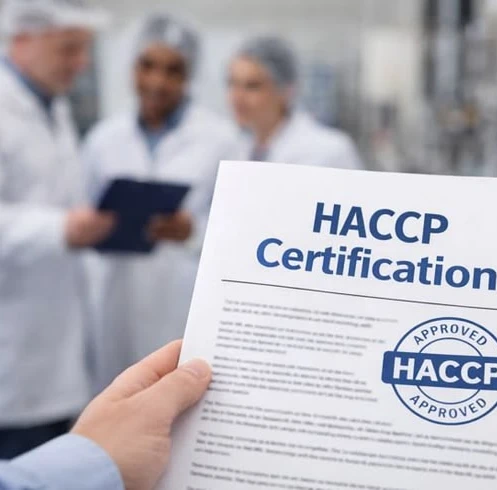
What Is the HACCP Level 3 Certificate?
HACCP stands for Hazard Analysis and Critical Control Points. It is an internationally recognised food safety management approach used by manufacturers, caterers, exporters, and hospitality businesses to prevent contamination before it happens, rather than reacting after the fact.
The HACCP training level 3 qualification builds on the foundation and intermediate levels. It is designed for people who already have some food safety knowledge and want to understand compliance, hazard control, and management procedures at a deeper, supervisory level.
Quick definition: A Level 3 HACCP course teaches learners to recognise legal responsibilities, apply a food safety management system, and monitor good practice around contamination, hygiene, cleaning, and temperature control within a manufacturing or food production environment.
Register for Courses
Our modern online learning platform allows you to study successfully and is supplemented with support from our team of experts.
Why Choose an HACCP Level 3 Certificate Online or In Person?
Food safety regulations are becoming stricter every year, and enforcement bodies expect businesses to prove their staff are properly trained. A level 3 haccp HACCP course helps you:
- Meet legal food safety obligations under current regulations
- Reduce the risk of product recalls, contamination incidents, and customer complaints
- Prepare for supervisory or team-leader responsibilities
- Support your business during internal and external safety audits
- Build a stronger, more credible CV in the food and hospitality sector
Many learners choose the HACCP level 3 certificate online option because it fits around shift work and existing job commitments, while still delivering the same depth of content as in-person training.

Who Should Attend This Course?
This qualification is suitable for anyone aged 18 or above who already has a basic understanding of food safety. It is particularly useful for:
- Food manufacturing supervisors and team leaders
- Quality assurance and quality control staff
- Production line managers in food factories
- Hygiene and compliance officers
- Anyone progressing from Level 2 food safety toward a management track
- Business owners who want hands-on knowledge of HACCP systems
Expert tip: If you are new to food safety altogether, we recommend starting with our Level 2 course first. Level 3 assumes you already understand basic hygiene and hazard concepts.
Course Modules Covered
The course is built around one core unit, Food Safety for Manufacturing/Catering, which is delivered across two main learning areas.
Compliance With Food Safety Legislation and Management Procedures
- Understanding food safety, food poisoning, and hazard terminology
- Legal responsibilities of food handlers and supervisors
- How to apply a food safety management system into a real business
- Verifying and validating food safety controls
- Managing hazards from delivery, storage, and stock rotation through to service
- Handling food safety inspections, audits, and complaint investigations
Understanding the due diligence defence and consequences of non-compliance
Application and Monitoring of Good Practice
- Personal hygiene standards, protective clothing, and fitness to work
- Staff induction, training, and competency assessment
- Cleaning, disinfection, sanitisation, and waste disposal procedures
- Pest identification, prevention, and control measures
- Microbiological, chemical, physical, and allergenic contamination control
- Temperature control: thawing, cooking, cooling, reheating, and holding food safely
- Correct use and validation of thermometers
Each module combines theory with real workplace scenarios, so learners leave with knowledge they can apply immediately on the factory floor.
Learning Outcomes
By the end of the course, learners will be able to:
- Explain the importance of food safety management procedures in a manufacturing setting
- Identify legal responsibilities relating to hygiene, contamination, and temperature control
- Apply hazard controls at each stage of the food production process
- Recognise the signs of poor hygiene, pest activity, and contamination risk
- Support their organisation during internal and external food safety audits
Course Duration, Eligibility, and Training Modes
Detail | Information |
Level | Level 3 (RQF) |
Guided Learning Hours (GLH) | 7 hours |
Minimum Age | 18 years and above |
Recommended Prior Knowledge | IELTS 6.0 |
Training Modes | Classroom / Online |
Assessment | Multiple-choice examination |
Eligibility & Training Modes
Eligibility
There are no formal entry barriers to register for this course, though a working understanding of basic food hygiene is strongly recommended before joining a Level 3 class.
Training Modes
We offer this course in classroom, online, and blended formats across Kerala, India. so working professionals can choose whichever mode suits their schedule.
Why Choose Al Salama School of Safety Studies?

Experienced Tutors
Our trainers hold recognised food safety qualifications and bring real manufacturing and hospitality experience into the classroom

Flexible Learning
Choose classroom, online, or blended delivery based on what works for you

Kerala-Based Support
Local guidance for FSSAI compliance and regional food industry requirements

Practical, Applied Teaching
We use real case studies from manufacturing environments, not just theory

Clear Progression Path
Learners can continue on to Level 4 Food Safety in Manufacturing or Catering competency-based qualifications
Benefits of Completing This Course
- Stronger understanding of legal and workplace responsibilities
- Improved ability to lead hygiene, cleaning, and contamination-control procedures
- Better preparedness for internal and third-party food safety audits
- Increased confidence in handling pest control and temperature management
- A recognised certificate that supports promotion and career progression
- Reduced risk of costly compliance failures for your employer or business
Progression Opportunities
After completing your HACCP Level 3 certificate, you can continue developing your career through:
- Level 4 Award in Food Safety in Manufacturing – for those moving into senior management or auditing roles
- L4 International Award in HACCP
Frequently Asked Questions
What is a HACCP Level 3 certificate?
It is a Level 3 qualification that teaches supervisors and managers how to apply food safety management systems, control contamination, and maintain compliance in a manufacturing environment.
Who needs HACCP Level 3 training?
Supervisors, quality control staff, production managers, and anyone progressing into a leadership role within food manufacturing or hospitality should consider this course.
Is there an online option for HACCP Level 3?
Yes, we offer a HACCP Level 3 certificate online alongside classroom-based training, so learners can choose the format that fits their schedule.
How long does the HACCP Level 3 course take?
The course has 7 guided learning hours . So it will be 3 days online classes or 2 days offline classes
What is the pass mark for the HACCP Level 3 exam?
Learners need to score at least 60% (18 out of 30 questions) to pass. A score of 80% or above earns a distinction.
Do I need prior food safety knowledge before starting Level 3?
Yes, it is recommended that learners already have basic food safety awareness, ideally equivalent to Level 1 English and Maths, before joining this course.
What is the minimum age to register for this course?
Learners must be at least 18 years old to register for the HACCP Level 3 Award in Food Safety for Manufacturing.
How is the HACCP Level 3 course assessed?
It is assessed through a 30-question multiple-choice examination, completed within 60 minutes and externally marked.
What topics does the HACCP Level 3 course cover? T
opics include food safety legislation, hazard controls, personal hygiene, cleaning and disinfection, pest control, contamination types, and temperature control procedures.
Can this course help with FSSAI compliance in Kerala?
Yes, the knowledge gained supports businesses working toward FSSAI compliance, particularly around hygiene, hazard control, and documentation practices.
What can I do after completing HACCP Level 3?
Graduates commonly progress to a Level 4 Award in Food Safety in Manufacturing or related hospitality competency-based qualifications.
Is HACCP Level 3 the same as ISO 22000?
No. HACCP is a hazard-analysis framework, while ISO 22000 is a broader international food safety management standard. Many manufacturers use both together.
What ID do I need to sit the HACCP Level 3 exam?
A valid passport, signed photocard driving licence, official warrant card, or another form of photographic ID is required before the assessment.
Does Al Salama offer classroom training in Kerala?
Yes, we deliver HACCP Level 3 training across Kerala, through classroom, online, and blended learning options.
Why should I choose Al Salama for HACCP Level 3 training?
We combine experienced trainers, flexible learning formats, and Kerala-specific industry insight to help learners gain a practical, career-relevant qualification.