Food Handler Personal Hygiene Checklist - Guide for Food Safety Compliance
Food safety begins with people. No matter how advanced your kitchen equipment or how well-designed your HACCP plan is, poor personal hygiene can compromise food quality within seconds. A single lapse, unwashed hands, improper glove use, or working while sick, can lead to contamination, foodborne illness outbreaks, regulatory penalties, and long-term reputational damage.
This comprehensive guide explains the Food Handler Personal Hygiene Checklist, why it matters, and how businesses can implement it effectively. It is designed for restaurants, catering services, food manufacturing units, hospitality operations, and institutional kitchens aiming to maintain regulatory compliance and build a strong food safety culture.
What Is Personal Hygiene in Food Handling?
Personal hygiene in food handling refers to the practices, habits, and behaviors that food workers follow to prevent biological, physical, and chemical contamination of food.
It includes:
- Proper handwashing
- Clean uniforms and protective clothing
- Illness reporting
- Grooming standards
- Safe glove use and use of appropriate PPE
- Controlled behavior in food preparation areas
Personal hygiene is a foundational prerequisite program in any food safety management system, including HACCP-based frameworks.
Why Is Personal Hygiene Critical in Food Safety?
1. Prevents Foodborne Illness
Food handlers can unknowingly carry pathogens such as:
Salmonella
coli
Norovirus
Staphylococcus aureus
Hepatitis A virus
Unwashed hands remain one of the leading causes of contamination in food establishments worldwide.
2. Reduces Cross-Contamination
Contamination can occur when:
A worker handles raw meat and then touches ready-to-eat food.
Gloves are not changed between tasks.
Hair, jewellery, or personal items contact food.
3. Ensures Regulatory Compliance
Food authorities require:
Documented hygiene policies
Staff training certification
Regular inspections
Illness control procedures
Non-compliance may lead to fines, closures, or license suspension.
4. Protects Brand Reputation
Food safety incidents spread rapidly through social media and review platforms. A single hygiene failure can permanently damage public trust.
Food Handler Personal Hygiene Checklist
Below is a detailed checklist that can be implemented in daily operations.
1. Hand Hygiene Checklist
Hand hygiene is the most important defense against contamination.
When Must Food Handlers Wash Their Hands?
Before starting work
After using the restroom
After handling raw meat, poultry, or seafood
After touching face, hair, or body
After coughing or sneezing
After handling garbage
After cleaning tasks
After handling money
After using mobile phones
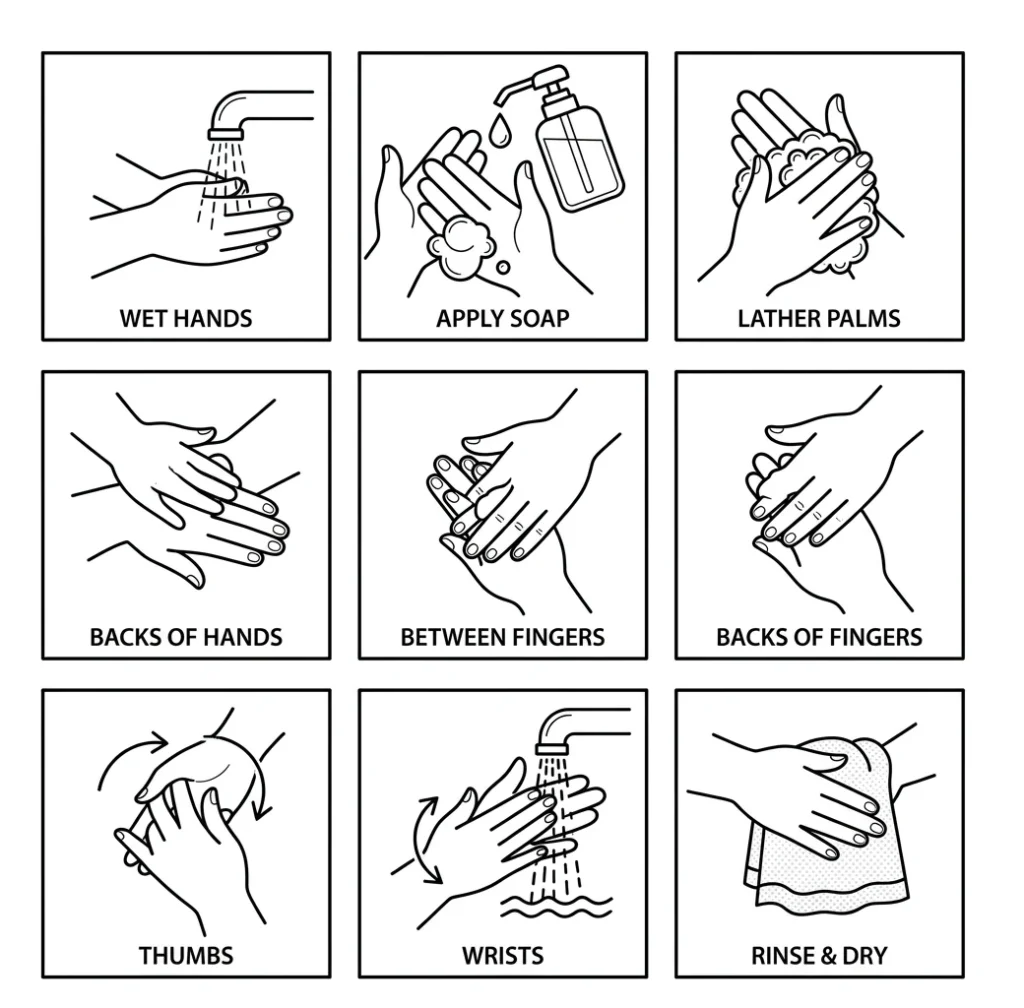
Correct Handwashing Procedure
Wet hands with warm running water.
Apply approved antibacterial soap.
Scrub for at least 20 seconds, including the backs of hands, between fingers, and under fingernails.
Rinse thoroughly under running water.
Dry hands completely with disposable paper towels or an air dryer.
Use a paper towel to turn off the tap and open the door if necessary.
Important: Hand sanitizer does not replace proper handwashing and should only be used on visibly clean hands.
2. Illness Reporting and Health Monitoring
Food handlers must not work when ill.
Symptoms That Require Immediate Reporting
Vomiting
Diarrhea
Fever
Jaundice
Sore throat with fever
Infected wounds with discharge
Employer Responsibilities
Maintain an illness reporting log
Exclude or restrict sick employees
Require medical clearance when necessary
Train staff to understand reporting obligations
Allowing a symptomatic employee to handle food significantly increases the risk of outbreak.
In most jurisdictions, food workers are legally required to report key symptoms (such as vomiting, diarrhea, jaundice, sore throat with fever, or infected wounds) to their manager before starting or continuing work.
Managers must assess each case and either exclude the worker from the premises or restrict them from food handling until they are no longer infectious, often for at least 48 hours after symptoms have resolved or as specified by local regulations.
For certain high‑risk infections (for example Norovirus, Salmonella, Shigella, E. coli, or Hepatitis A), food handlers may be required to submit medical clearance or a doctor’s fitness‑to‑work note before returning to food duties.
Food businesses are expected to keep written records of illness reports, exclusion decisions, and return‑to‑work approvals as part of their food safety documentation and audit trail.
Regulations and codes of practice generally require a formal, written illness reporting procedure, staff training on how and when to report, and alignment with national authorities such as FSSAI in India or equivalent regulators in other countries.
3. Uniform and Protective Clothing Standards
Protective clothing acts as a barrier between the worker and the food.
Uniform Requirements
Clean uniform daily
Hairnet or cap
Beard net (if applicable)
Closed, non-slip shoes
Clean apron
Disposable gloves (when required)
Additional Controls
Remove apron before restroom use
Store personal belongings outside prep areas
Replace contaminated uniforms immediately
Dirty uniforms can transfer bacteria directly to food.
4. Jewellery, Nails, and Grooming Standards
Not Permitted
Rings (except plain wedding band if policy allows)
Bracelets
Watches
Artificial nails
Nail polish
Strong perfumes
Required Grooming Practices
Short, clean fingernails
Clean hair, tied back
Daily bathing
Clean-shaven or properly covered beard
Jewelry can trap bacteria and fall into food, causing both biological and physical hazards.
5. Proper Glove Use
Gloves are helpful but frequently misused.
Glove Use Rules
Wash hands before wearing gloves.
Change gloves:
Between tasks
After handling raw food
If torn
If contaminated
Never wash and reuse disposable gloves.
Gloves do not eliminate the need for handwashing.
Incorrect glove practices can create a false sense of security.
6. Behavioral Hygiene Standards
Personal behavior is equally important.
Food handlers must:
Avoid eating in food preparation areas
Avoid chewing gum
Avoid smoking in or near food areas
Avoid touching face frequently
Cover coughs properly
Limit mobile phone use in prep areas
Behavior directly influences contamination risk.
Regulatory and Compliance Perspective
Food establishments are required to implement hygiene controls under national and international food safety regulations. While requirements vary by country, common standards include:
- Hygiene policy documentation
- Food safety training certification
- Supervisor monitoring
- HACCP implementation
- Routine internal audits
In India, businesses should also comply with FSSAI guidelines on personal hygiene, training, and food safety management systems, in addition to any local regulatory requirements. Investing in structured, certified training programs helps ensure compliance, improves inspection outcomes, and reduces the risk of regulatory action.
Along with gloves, head covers (hairnets and beard nets) and aprons are also critical components of personal protective equipment and must be included in your hygiene and PPE policies.
Investing in proper training ensures compliance and reduces inspection risks.
Common Personal Hygiene Mistakes in Food Service
Even trained staff may make errors.
Frequent Mistakes
- Wearing gloves without washing hands
- Using sanitizer instead of soap
- Wearing jewelry under gloves
- Returning to work too soon after illness
- Touching cash and food without washing
- Reusing disposable gloves
Regular refresher training minimizes these risks.
Training Food Handlers on Personal Hygiene
Effective hygiene programs require structured education.
Recommended Training Methods
- Mandatory certification programs
- Practical demonstrations
- Visual reminder posters
- Scenario-based training
- Periodic refresher sessions
- Internal audits
Benefits of Implementing a Strict Personal Hygiene Checklist
- Reduced Foodborne Illness Incidents
- Improved Inspection Scores
- Increased Customer Trust
- Reduced Legal Risk
- Stronger Staff Accountability
Improved Internal Audit Results
Hygiene is not a one-time policy, it is a daily operational discipline.
Final Thoughts: Building a Strong Food Safety Culture
Personal hygiene is the first and most critical barrier against food contamination. Equipment, cleaning chemicals, and HACCP systems cannot compensate for poor personal hygiene practices.
Organizations that prioritize:
- Staff training
- Documented procedures
- Daily monitoring
- Manager accountability
- Continuous improvement
create safer food environments and protect public health.