Fire Safety Culture in Organizations: Building a Proactive Safety Mindset Beyond Compliance
In today’s fast-paced work environments, fire incidents can strike without warning, turning routine operations into emergencies. Yet, many organizations stop at meeting basic regulatory requirements, like installing smoke detectors or conducting annual drills. This compliance-only approach leaves gaps that a strong fire safety culture can fill. A proactive safety mindset goes further, embedding fire prevention into everyday decisions and behaviors. It turns safety from a checklist item into a shared priority that protects people, assets, and reputations.
For safety managers, organizational leaders, HR professionals, and students eyeing management roles in safety, shifting to this mindset means focusing on people as much as processes. Drawing from proven strategies in workplace safety, this post explores how to build a fire safety culture that drives engagement, learns from incidents, and prepares for the unexpected. At Al Salama Safety, we’ve seen firsthand how these elements reduce risks and boost team morale. Let’s break it down step by step.
Leadership Commitment: Setting the Tone from the Top
Leaders shape the fire safety culture more than any policy ever could. When executives treat fire safety as a core business value, it signals to everyone that protection comes first. This starts with visible actions: joining fire drills, reviewing risk assessments in board meetings, and allocating budgets for updated suppression systems without hesitation. For instance, a manufacturing firm might see its CEO personally inspect flammable storage areas, showing that no corner of the operation is exempt.
Beyond gestures, leadership commitment involves integrating fire safety into strategic planning. This means embedding work health and safety principles into operations, like promoting employee input on fire hazards during quarterly reviews. Leaders who prioritize resources for training and equipment foster trust, encouraging teams to speak up about risks like overloaded circuits or blocked exits. The payoff? Fewer accidents, higher retention, and a workplace where safety feels like a collective win.
In high-stakes sectors like healthcare or logistics, this top-down approach prevents small oversights from escalating. Safety managers can push for leadership training sessions that cover fire-specific scenarios, ensuring decisions always weigh prevention. Students in management programs should note how such commitment aligns with duty-of-care standards, turning compliance into a competitive edge.
Building an Organizational Safety Culture: From Rules to Habits
A true fire safety culture transforms rules into habits through consistent reinforcement. It begins with clear policies that align with standards like NFPA guidelines, but it doesn’t end there. Organizations must weave fire awareness into daily routines, think toolbox talks on spotting ignition sources or integrating evacuation checks into shift handovers.
Key to this is open communication. Establish channels like anonymous apps for reporting near-misses, such as a frayed electrical cord that could spark a fire. Regular consultations with safety reps build buy-in, making employees partners in hazard hunts. HR professionals play a vital role here, incorporating fire safety modules into onboarding to set expectations early.
Psychological safety is the glue. When workers know their concerns won’t lead to blame, they report issues freely, creating a feedback loop that strengthens the culture. For organizational leaders, this means measuring culture through surveys that gauge attitudes toward fire risks, not just incident logs. Over time, these efforts shift mindsets: from “that’s not my job” to “we all own this.”
At Al Salama Safety, we advise clients to start small, launch a monthly safety spotlight newsletter highlighting fire prevention tips. This builds momentum, proving that a proactive fire safety culture saves lives and cuts costs from downtime.
Employee Engagement in Fire Safety Programs: Empowering the Front Line
Employees are the eyes and ears of fire safety, but engagement only happens when programs feel relevant and inclusive. Move beyond mandatory sessions by involving staff in designing initiatives, like forming committees to audit egress routes or simulate smoke-filled evacuations.
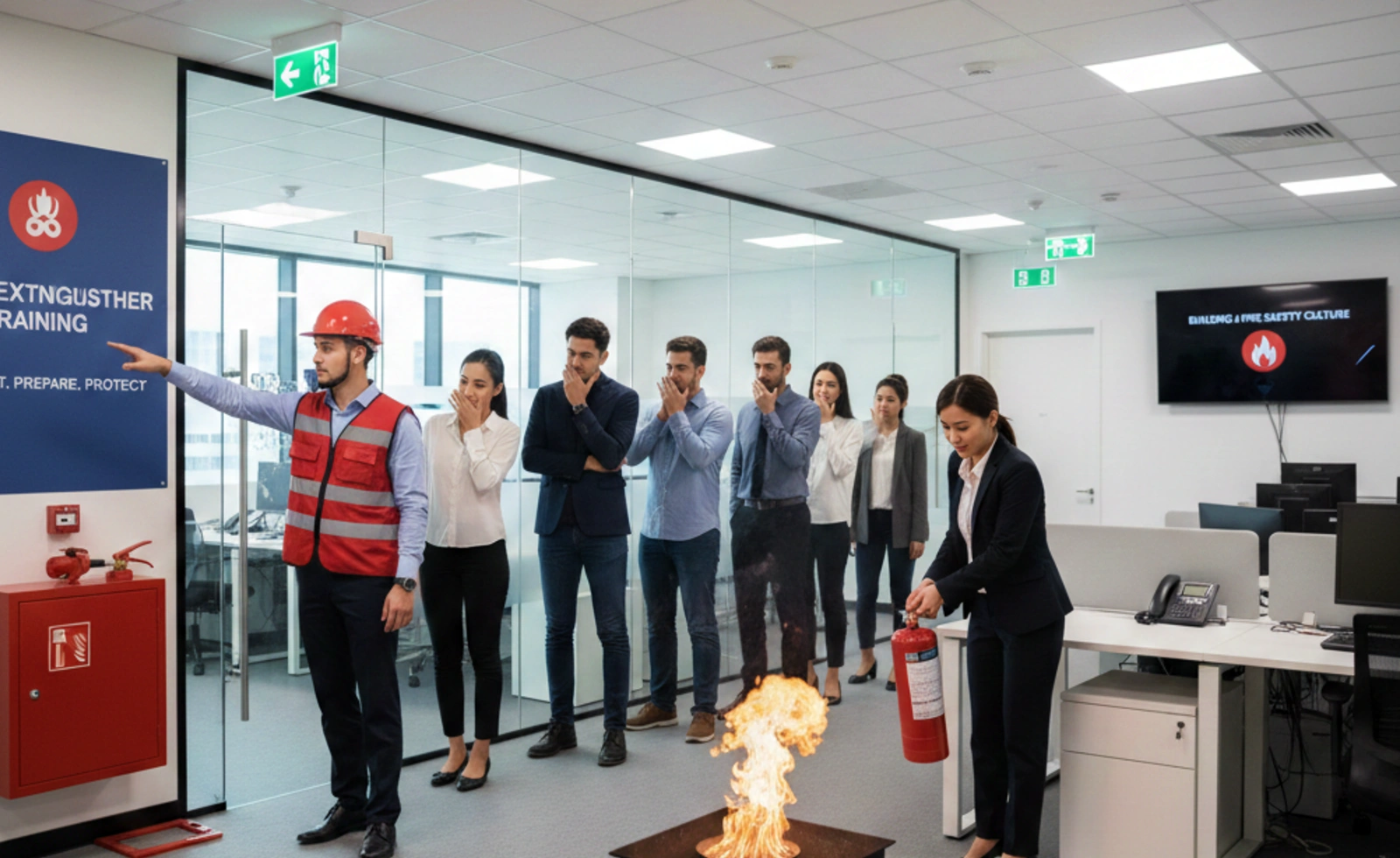
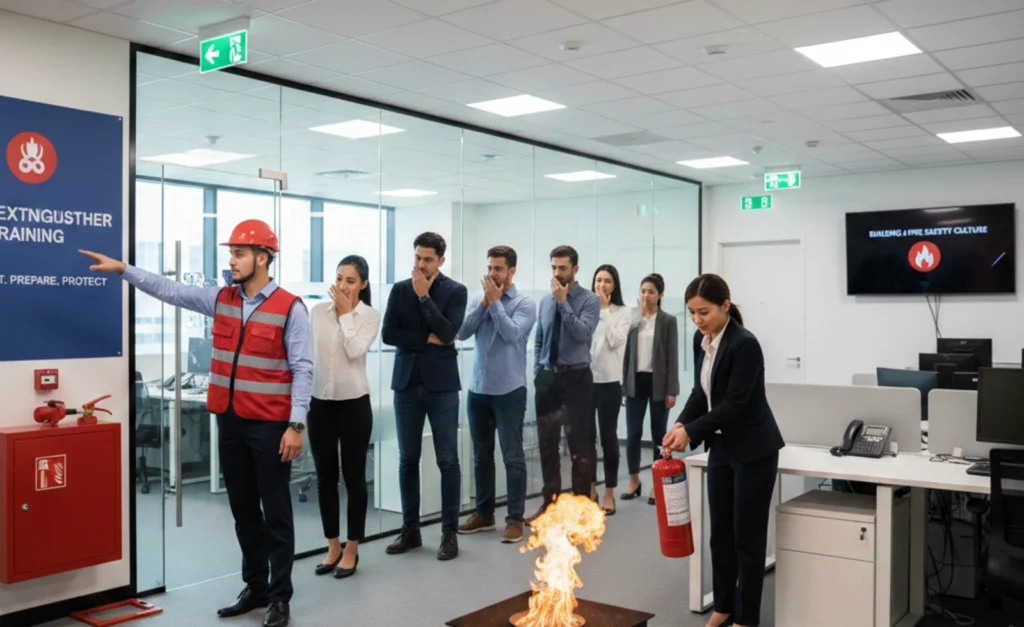
Hands-on training keeps it real: workshops on extinguisher use or hazard recognition for common risks like improper chemical storage. Peer-led observations, where colleagues watch for unsafe practices and offer constructive feedback, build camaraderie and sharpen skills. For HR teams, tying these to performance goals reinforces participation without pressure.
In diverse organizations, tailor programs to roles, warehouse staff learn about forklift-related fires, while office teams focus on electrical safety. Students pursuing safety management can study how engagement metrics, like drill participation rates, predict overall program success.
The result? Workers who not only comply but anticipate threats, reducing incidents by up to 50% in engaged teams. Safety managers, track this through leading indicators like hazard reports to spot engagement dips early.
Incident Investigation Methodologies: Turning Setbacks into Safeguards
When a fire incident occurs, even a minor one, it’s a chance to learn, not just document. Effective investigation methodologies go beyond fault-finding to uncover root causes, using tools like the “5 Whys” technique to drill down: Why did the equipment fail? Because maintenance lagged. Why? Scheduling gaps.
Distinguish human errors from willful violations to keep reporting stigma-free. Involve a cross-functional team, safety reps, operators, and leaders, to review evidence, from witness statements to system logs. For fire-specific probes, assess factors like detection delays or response bottlenecks.
Post-investigation, share anonymized lessons via case studies in team meetings, turning “what went wrong” into “how we’ll prevent it next.” This methodology fosters a no-blame environment, boosting report rates and preventing repeats.
Organizational leaders should standardize these processes in a safety management system, ensuring every incident feeds into broader improvements. For those new to safety roles, mastering this skill builds credibility and protects futures.
Continuous Improvement Systems: Keeping Safety Sharp and Adaptive
Static safety plans gather dust; continuous improvement keeps them alive. Build systems with regular audits, policy reviews, and feedback loops tied to incidents or drills. Benchmark against industry bests, like updating suppression tech based on emerging NFPA standards.
Use leading indicators, training completion or audit scores, to spot trends before they become problems. Safety managers can lead Kaizen-style events, where teams brainstorm tweaks to fire procedures, like faster alarm responses.
Incorporate tech, such as digital checklists for inspections, to track progress and flag gaps. This iterative approach minimizes disruptions and adapts to changes, like hybrid work introducing new home-office fire risks.
HR professionals, align these systems with performance reviews to sustain momentum. The outcome: a resilient organization where fire safety evolves with the business.
Motivating Safety Participation: Rewards That Stick
Participation thrives on motivation, not mandates. Recognition programs spotlight safe acts, like calling out a blocked sprinkler, with shout-outs in newsletters or small bonuses. Tie incentives to team goals, such as zero near-misses in a quarter, to spark friendly competition.
Gamify elements: safety leaderboards or badges for drill mastery. Leaders modeling enthusiasm, sharing personal fire safety stories, amplifies buy-in.
For students, understand how intrinsic motivators, like pride in protecting colleagues, pair with extrinsic ones for lasting impact. Track uptake through survey responses to refine what works.
Coordinating Disaster Preparedness: Unified Response Plans
Fire doesn’t respect departments; preparedness demands coordination. Develop integrated plans that outline roles, from wardens guiding evacuations to IT securing data backups. Run cross-team simulations quarterly, testing communication with first responders.
Map assembly points and accountability checks to ensure no one gets left behind. Safety managers facilitate after-action reviews to refine coordination.
In global firms, standardize yet localize plans for site-specific hazards. This unity turns chaos into control, safeguarding operations post-incident.
Wrapping Up: Ignite a Lasting Fire Safety Culture
Building a proactive fire safety mindset demands effort, but the returns, safer teams, fewer losses, stronger trust, make it essential. Start with leadership buy-in, fuel employee engagement, and sustain through learning and adaptation. Organizations that embrace this see safety as empowerment, not obligation.
Ready to equip your team? Our Diploma in Fire Safety Course delivers hands-on training in prevention, response, and leadership. Enroll today and turn compliance into culture.